

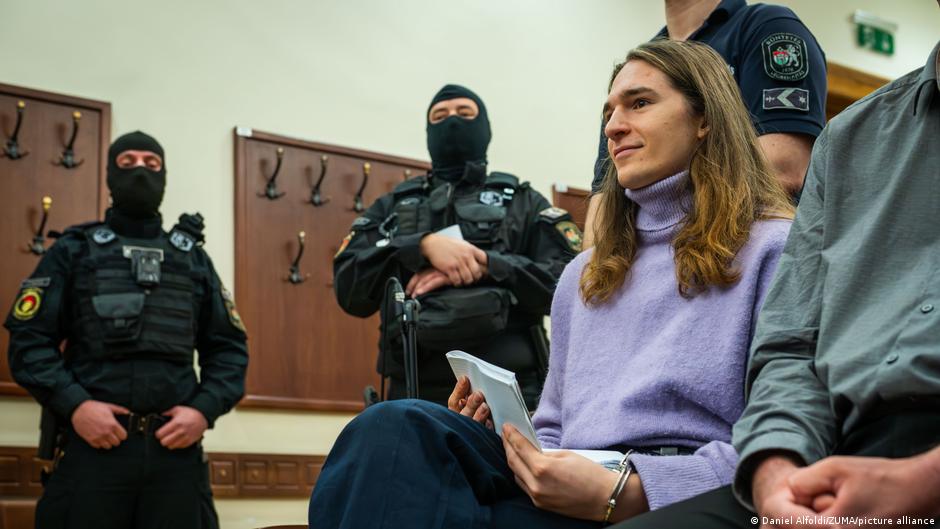
Maja T., a nonbinary anti-fascist activist from Germany, has been sentenced to eight years in prison in Budapest. The trial has been controversial and has political implications.
What I could not find in articles published in English is a mention of the very thin line of evidence. From Tagesschau (German article, translated with Deepl):
Little incriminating evidence
During the trial, the prosecution presented little evidence. Neither witness statements nor DNA evidence incriminated the accused. The prosecution argued on the basis of circumstantial evidence based on footage from a security camera near one of the crime scenes.
The prosecution stated that Maja T. could be seen in these images together with other attackers. The defence countered that the person who was supposed to be T. clearly did not have a weapon with her.
“Criminal organisation” in Hungarian law only means that at the time of the crime committed, the perpetrators were organised, had a hierarchical relationship, and committed the crime with common premeditation.
It’s not like RICO, it only carries I think 50% extra time as a “qualified case” of the base criminal act. If they would have done it at night, that’s another qualified case. So would be if the victim was carrying out “public service”, eg. police on duty, EMT on duty or a teacher at work.
And about the prisons, yeah our prisons suck ass and nobody should be in there IMO. Our hospitals are also bedbug infested hellholes that kill people.
They also shouldn’t have extradited them. I’m just saying that in Hungary, this is actually not just the government, and Maja got no special treatment positive or negative.