

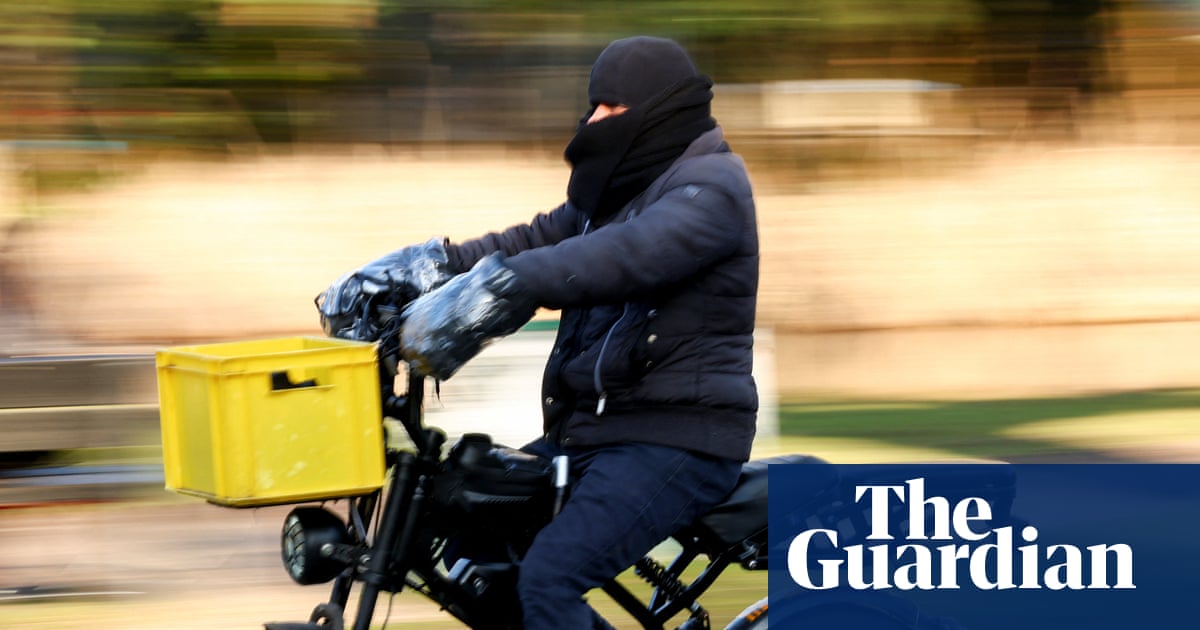
The safety organisation VeiligheidNL estimates that 5,000 fatbike riders are treated in A&E [ i.e Accident & Emergency] departments each year, on the basis of a recent sample of hospitals. “And we also see that especially these young people aged from 12 to 15 have the most accidents,” said the spokesperson Tom de Beus.
Now Amsterdam’s head of transport, Melanie van der Horst, has said “unorthodox measures” are needed and has announced that she will ban these heavy electric bikes from city parks, starting in the Vondelpark. Like the city of Enschede, which is also drawing up a city centre ban, she is acting on a stream of requests “begging me to ban the fatbikes”.
Well, first, you did try to make points about brain injuries caused by wearing helmets. Now you claim you never argued about that, so what is it?
Second, it is IMHO not quite intelligent to make an argument about head protection not protectng other body parts. That’s like saying a stab protection vest is useless because you can get shot in the head.
Third, the first article I linked talks about a systematic comparative analysis of 23 studies examining risk homeostasis hypothesis, of which 18 could not confirm the hypothesis, three showing inconclusive results and only two being arguments for the hypothesis, the analysis concluding there is little to no evidence for bicycle helmets leading to riskier behavior.
I know the studies about mandatory helmet rules (something I actually never talked about), I find people’s behavior in this case utterly incomprehensible and stupid, but again, it’s not something I argued for. It just shows me we need to encourage helmet use in different ways. Mandatory for children maybe so that they get used to it, normalizing and encouraging wearing helmets by advertisements etc. IDK, but such efforts can be quite successful if funded and supportes sufficiently.
Ovoid shapes will cause rotational forces on perpendicular impacts, whilst spherical shapes do not. This is just Maths.
Notice how motorcycle helmets are actually spherical.
In my experience the traditional bicycle helmets are half ovoids.
That said I drilled down to the comparative analisys linked from the study you indicated and it basically concludes that people who are more fearful tend to wear helmets when cycling, so the reverse causality relationship of the risk compensation theory (which would be that a person that starts wearing a helmet when cycling becomes more risk taking).
So you make a good point that advising people to wear helmets is not a bad idea.
IMHO, as long as it doesn’t turn people away from a more compreensive risk reduction form of cycling (which is how I personally tackled changing from cycling in The Netherlands to cycling in London, which at the time had much worse cycling infrastructure and were motorists weren’t used to cyclists when I started doing it - by having quite a lot of tricks to keep me safe from the innatention and error of not just motorists but also pedestrians, most of which were not at all needed in The Netherlands were other road users always expect cyclists to be around), it’s fine.
As for mandatory cycling helmets, I’m against it because it severely lowers the uptake of cycling which ultimatelly is worse for people because of worse health outcomes. Also my experience cycling in London during the period were it went from quite atypical to more normalized, is that more cyclists around results in more motorists and pedestrians being naturally aware of and careful towards cyclists (an effect I also noticed from the other side in myself as both a motorist and a pedestrian when I moved from a country with no cycling culture to The Netherlands and got used to lots of cyclists around) which in turn makes cycling safer for everybody - in other words, more cycling adoption makes cycling safer. This seems to be aligned with the most common position in The Netherlands as per my last link:
Bruh, it’s not that deep. Statistics show that wearing a helmet reduces chances to severe head and brain injuries.
I don’t care since I am not discussing helmet mandates.
As for the rest, obviously it’s better to prevent accidents in the first place and obviously we need to reduce the number of cars on our streets for multiple reasons. But that’s all policy while wearing a helmet is a cheap and easy way to protect yourself against unavoidable accidents and avoidable accidents while waiting and advocating for policy change.
Common bicycle helmet
Common motorcycle helmet
Are you really telling me that in the horizontal axis the first doesn’t have a far bigger ratio of major-axis to minor-axis than the second?
Never disputed. After all a hat too will “reduce chances to severe head and brain injuries”, though by a tiny amount.
The point was always about how much and if in the typical conditions of city cycling it is enough to offset possible negative effects such as increase risk taking and less careful behavior from drivers around cyclists who are better protected.
It’s about aggregated effects rather than this one specific thing you focused on to the exclusion of everything else. If you focus on one thing alone then “always wear a hat when you cycle” would count as a safety recommendation for cyclists.
Mind you from our discussions I did shift my position to think it’s a good idea in overall to recommend people to wear a helmet when cycling (mainly because of the study you linked that reviewed various papers and found too little indication of a risk compensation effect), though not on mandatory helmet wearing because there the broader implications - as shown by the experience of Australia - are that all in all it causes more deaths because of the indirect effect of people cycling less hence dying in greater numbers because of the higher mortality for people who don’t regularly exercise. There’s also the point I quoted from the Dutch that in terms of policy aiming for second prevention (such as cyclist protection equipment) negatively impacts the investment in primary prevention (i.e. a safer cycling environment).
I don’t quite understand what you are arguing about. I thought the discussion was about whether wearing a helmet while cycling increases or decreases one’s safety and especially one’s risk for serious head/brain injuries.
I never made any statements about mandatory helmet rules, effects of helmet shapes etc. I encourage wearing helmets and made some speculations about how an individual’s decision to wear a helmet could be encouraged, that’s it.