

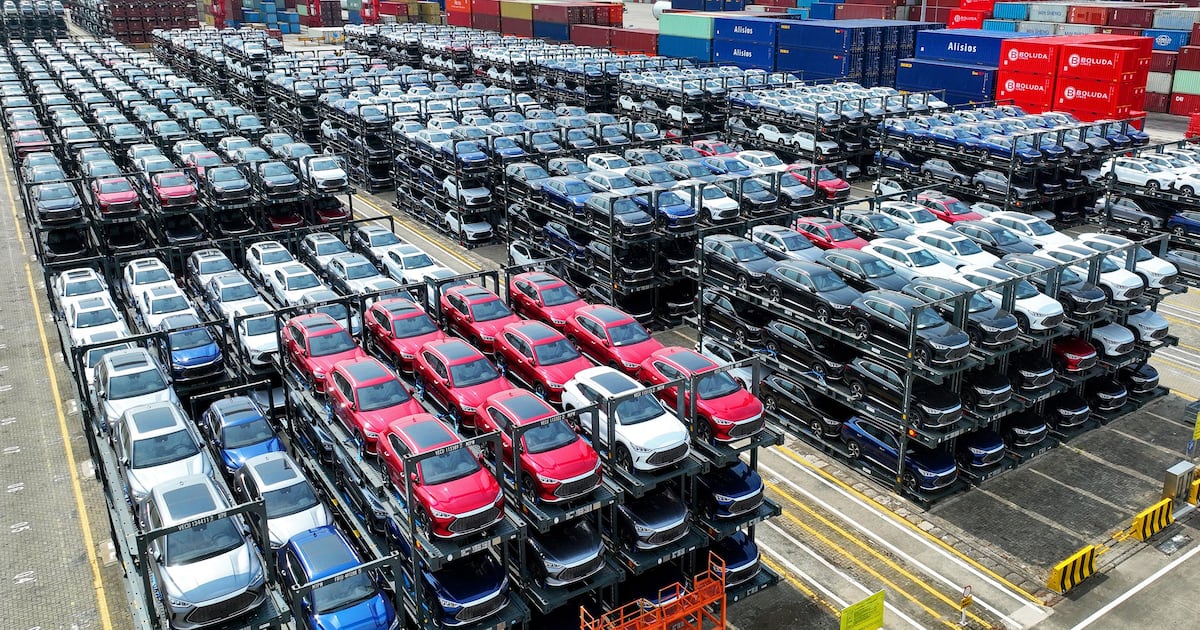
“We’re talking about losing significant parts of the automotive sector and its supply chains, pressure on machine tools, chemicals, the wind industry in Europe that could be wiped out in the next couple of years. I think there’s just more and more concern about the fact that in all of these sectors, China is moving into a dominant or even monopolistic position,” says Andrew Small, director of the Asia programme at the European Council of Foreign Relations (ECFR) in Berlin.
Some in Brussels thought Trump’s return to the White House could help to facilitate a reset in the EU-China relationship. But while Europe’s reliance on the US for security meant that the EU had to roll over when Trump threatened tariffs, China refused to bend, and its tough strategy has so far been successful.
“I think what became clear from the Chinese end was that the view would rather be that Europe is in a weaker position as a result of the situation in the transatlantic ties, and Europe needs to be the one to give things up. That’s what we’ve seen pretty much since then,” says Small.
China’s dominant position in some manufacturing sectors offers leverage of its own, as the Dutch government discovered last September when it seized control of Nexperia, a Chinese-owned chip manufacturer. Beijing retaliated by blocking exports of Nexperia chips
Insightful article. I found especially this part interesting:
In other words, Europe doesn’t even know what it would like China to do because they don’t even know what China could do to help Europe. So … that’s like if you’re not satisfied with the work that one of your subordinates is doing, but you can’t even meaningfully put up any argument or criteria of why you’re dissatisfied. It’s like a cat that’s meowing or a baby that’s crying but it doesn’t even know itself what it wants. That’s the EU right now. (except that China is not a subordinate and more a coworker)
In other words, the EU is literally complaining about the fact that China does industry the right way, in the sense of driving quality up and production costs down (as one should; as is the core goal of capitalism as it was originally envisioned) by automating everything. And China tries to “help” the EU or at least respect the EU’s demands by … basically telling companies inside China to be less efficient and fuck up some more(?) and then they also say that basically, chinese citizens “need to consume more”. Which, if you really think about it, is a very philosophically odd thing to say. Why does the EU care how much the chinese citizens consume? What’s the advantage to the EU over simply incinerating any “excess production”? Where’s the point in it all?