

…
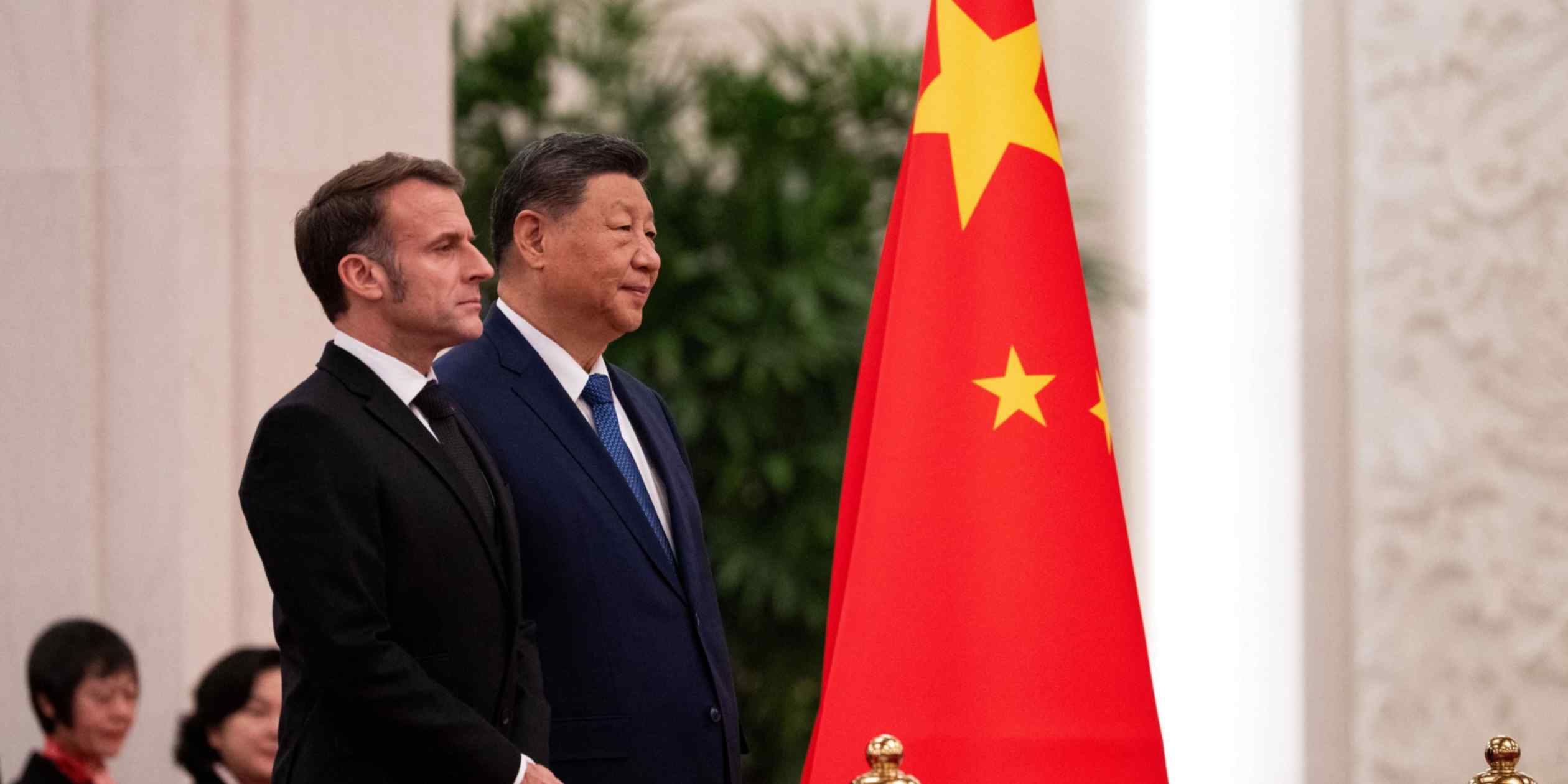
Amid the backdrop of its spat with Japan, Beijing has hosted a flurry of recent diplomatic activity with European leaders. German Vice Chancellor and Finance Minister Lars Klingbeil visited in November, followed this month by French President Emmanuel Macron and German Foreign Minister Johann Wadephul.
…
This whirlwind of visits follows a similar active scene in the fall, when European leaders visited Japan during the World Expo Osaka.
The timing of the European leaders’ visits to China comes at a curious time for Japan. Last month in parliament, Japanese Prime Minister Sanae Takaichi made comments about a Taiwan emergency that triggered a furious response from China.
Chinese Foreign Minister Wang Yi has been using his meetings with European officials to push Beijing’s narrative about the dispute.
…
He reportedly told Wadephul that, unlike Germany, Japan has not thoroughly reflected on its history of aggression even 80 years after World War II.
He told French Foreign Minister Jean-Noel Barrot that Beijing believes France will understand and support China’s legitimate position, according to the Chinese Foreign Ministry.
The European countries have refrained from commenting on these reports directly, an attitude that can be interpreted as tacit approval.
But Japan should not be too concerned about Europe cozying up to China. The recent diplomatic visits were mostly planned before Takaichi took office. European diplomacy in Asia typically balances visits among Japan, China, India and other major countries.
Europe’s basic position is to position Japan as a country with which it shares democratic values and the rule of law.
…
Beijing is trying to spread the narrative that Tokyo is reverting to its militaristic ways, but EU policymakers are not buying it. Rather, they see China’s hegemonic ambitions as increasing the risk of a Taiwan conflict, forcing Japan to respond.
…
The Chinese government’s call for its citizens to refrain from traveling to Japan has been widely reported in Europe. Meanwhile, China has a history of using export controls on rare-earth elements to pressure European companies. When these factors are combined, the image in Europe of China as an authoritarian state that uses economic coercion as a weapon grows stronger.
…
Policymakers in major European economies frequently exchange information and coordinate China policies, though approaches vary across the continent. Long-term plans are emerging to reduce economic dependence on China, tighten regulations on Chinese companies operating in the European market and control the inflow of Chinese products into Europe.
Europe is pursuing strategic autonomy while seeking to distance itself from both Washington – which it is also at odds with – and Beijing moving forward. It is quietly working to de-risk from both powers as part of its long-term strategy to strengthen itself as an economic bloc.
Signs are emerging that China’s excessive pressure on Japan is failing to win over Europe.
…
Japan must clearly demonstrate that it is a country based on the rule of law and an open society, and that it is a defender of liberal democracy and market economics. If Takaichi uses Group of Seven summits and other forums to explain this thoroughly, Europe will listen.
…
Now is the time to deepen cooperation with democratic forces in the Indo-Pacific region like South Korea, Taiwan and Australia, and gird against authoritarian states seeking to disrupt the international order.
Do you consider Hong Kong in 2020 a hostile takeover, an invasion, following agreed-upon procedure, or something else?
They’re actively threatening Taiwan in various, hybrid ways. Be it masked as military maneuvers and training operations specifically training how they would invade Taiwan, or using fishing vessels to violate waters.