

…
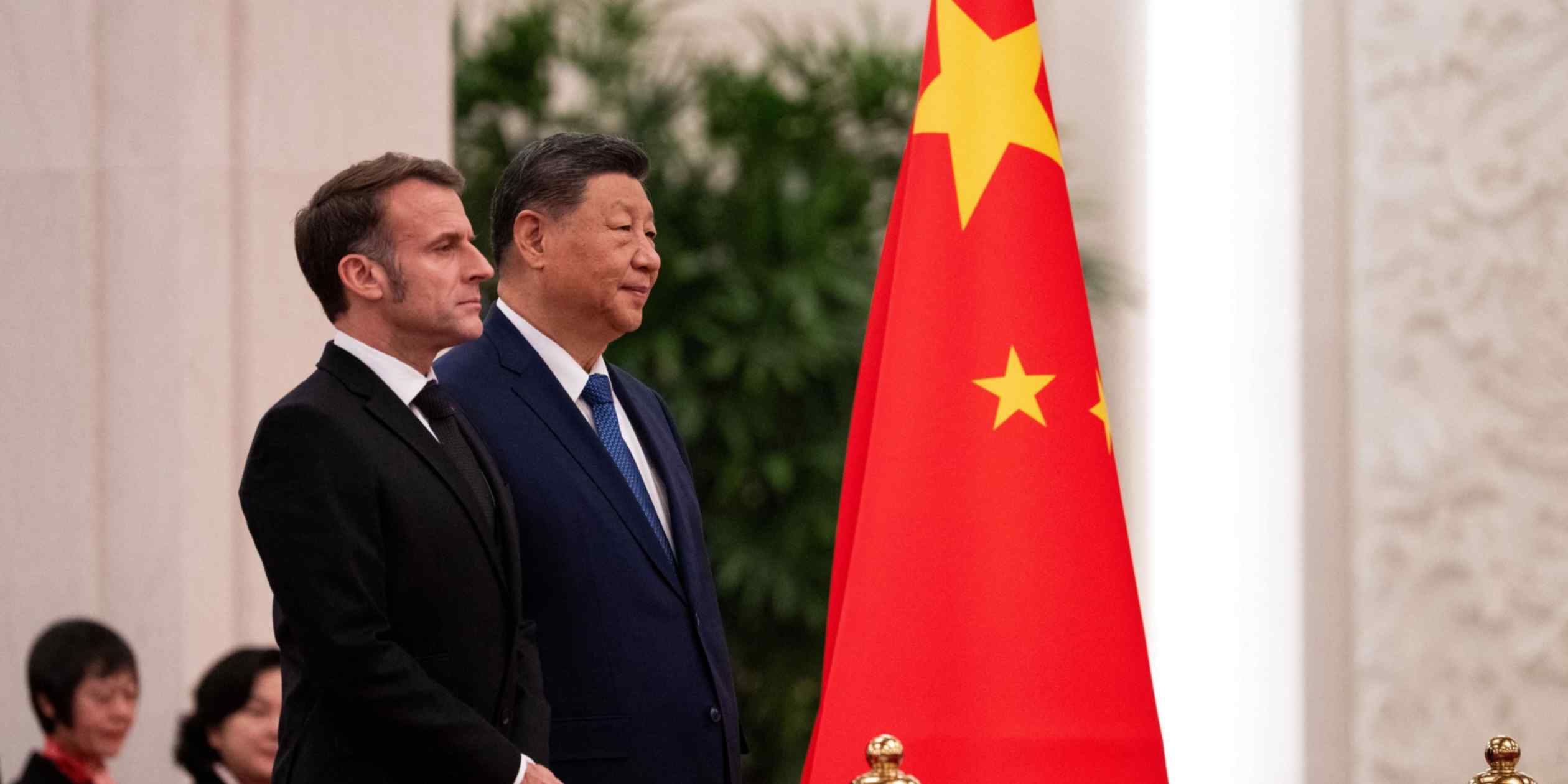
Amid the backdrop of its spat with Japan, Beijing has hosted a flurry of recent diplomatic activity with European leaders. German Vice Chancellor and Finance Minister Lars Klingbeil visited in November, followed this month by French President Emmanuel Macron and German Foreign Minister Johann Wadephul.
…
This whirlwind of visits follows a similar active scene in the fall, when European leaders visited Japan during the World Expo Osaka.
The timing of the European leaders’ visits to China comes at a curious time for Japan. Last month in parliament, Japanese Prime Minister Sanae Takaichi made comments about a Taiwan emergency that triggered a furious response from China.
Chinese Foreign Minister Wang Yi has been using his meetings with European officials to push Beijing’s narrative about the dispute.
…
He reportedly told Wadephul that, unlike Germany, Japan has not thoroughly reflected on its history of aggression even 80 years after World War II.
He told French Foreign Minister Jean-Noel Barrot that Beijing believes France will understand and support China’s legitimate position, according to the Chinese Foreign Ministry.
The European countries have refrained from commenting on these reports directly, an attitude that can be interpreted as tacit approval.
But Japan should not be too concerned about Europe cozying up to China. The recent diplomatic visits were mostly planned before Takaichi took office. European diplomacy in Asia typically balances visits among Japan, China, India and other major countries.
Europe’s basic position is to position Japan as a country with which it shares democratic values and the rule of law.
…
Beijing is trying to spread the narrative that Tokyo is reverting to its militaristic ways, but EU policymakers are not buying it. Rather, they see China’s hegemonic ambitions as increasing the risk of a Taiwan conflict, forcing Japan to respond.
…
The Chinese government’s call for its citizens to refrain from traveling to Japan has been widely reported in Europe. Meanwhile, China has a history of using export controls on rare-earth elements to pressure European companies. When these factors are combined, the image in Europe of China as an authoritarian state that uses economic coercion as a weapon grows stronger.
…
Policymakers in major European economies frequently exchange information and coordinate China policies, though approaches vary across the continent. Long-term plans are emerging to reduce economic dependence on China, tighten regulations on Chinese companies operating in the European market and control the inflow of Chinese products into Europe.
Europe is pursuing strategic autonomy while seeking to distance itself from both Washington – which it is also at odds with – and Beijing moving forward. It is quietly working to de-risk from both powers as part of its long-term strategy to strengthen itself as an economic bloc.
Signs are emerging that China’s excessive pressure on Japan is failing to win over Europe.
…
Japan must clearly demonstrate that it is a country based on the rule of law and an open society, and that it is a defender of liberal democracy and market economics. If Takaichi uses Group of Seven summits and other forums to explain this thoroughly, Europe will listen.
…
Now is the time to deepen cooperation with democratic forces in the Indo-Pacific region like South Korea, Taiwan and Australia, and gird against authoritarian states seeking to disrupt the international order.
So my wife’s Chinese and her company donates money to this Chinese Peace Organization. So they get free tickets to some event and my wife gets them because she’s actually Chinese and it looks better if a Chinese person attends than a bunch of white people. So I get dragged along.
And it’s for the anniversary of the Nanjing Massacre. Which I’d never heard of, but I did know her father has a hatred for Japanese people. And this is the reason why. So lots of PR bullshit, speeches, and boring crap. And then they invite some PRC guys up on stage. And in a room full of mostly Cantonese people: starts a long winded speech in Mandarin. He talks extensively about Taiwan and then talks about Japan and how they’ve spent more money on their military this year than in the past decade, and how Imperial Japan is rising again.
And then we watch a movie that I found entertaining but far too long. And its about the massacre. So my wife’s crying for awhile and I guess she had family including her father that were around for this incident.
And I kept trying to imagine the Japanese people that I know and work with… in the movie. There’s no way, I dont think its possible for the Japanese people now, to ever be or want to be like those portrayed in the movie. But the Chinese consul dude really believed it was going to happen again.
Japan has to arm up because of the Chinese threat in the area. China has been actively threatening Taiwan for many years now, including through physical activities at sea.
Criticizing Japan for not tackling its past is a valid criticism, but only believable from a country like Germany, which did and still does a lot for acknowledging and remembering history, including the dark parts. From China, it automatically seems like strategic propaganda towards more control in the area and towards invading Taiwan.
Similarly, Putin spouts a lot of criticism, but in the end, none of it is believable because of their own activities and inconsistencies.
Your description sounds like this ‘Chinese Peace Organization’ is aligned with the Chinese state/government. I assume it’s an org from China, not focusing on China?
You went to a propaganda evening and watched a propaganda movie and it made you feel weird and question things. Sounds like a reasonable response, what’s your takeaway though - you can’t imagine Japanese people doing it?
Every human is capable of doing awful things, especially during wartime and under dictatorship - like fascist Japan was. The most concerning thing about Japan today is probably that there is no mention of their warcrimes and horrific treatment of their neighboring countries during and prior to WWII in their education curriculum - mention these things to Japanese adults and many have not even heard of them. How can their future generations learn the dangers of a fascist autocracy and blind nationalism if they don’t hear the facts of their quite recent past?
Very hard to not point out how valuable the same question is when turned inward on the Chinese, though. Their own government has committed warcrimes against Tibet and many massacres against their own people - some of which are much more recent than Japan’s ugly legacy, and all of which are either heavily censored, erased from history books, or illegal to talk about under punishment of arrest and jail time.
I agree with what you’re saying, I actually asked the guys at work if they’d ever heard of it, and they hadn’t, and we were out with one of my wife’s Japanese friends and I got told not to mention that we went to this thing, but I asked anyway. She had no clue. She called her parents while we were at the restaurant and didn’t say much about the conversation but said they knew about it.