• 124 Posts
  • 472 Comments
Joined 8 months ago
cake
Cake day: April 4th, 2025

help-circle


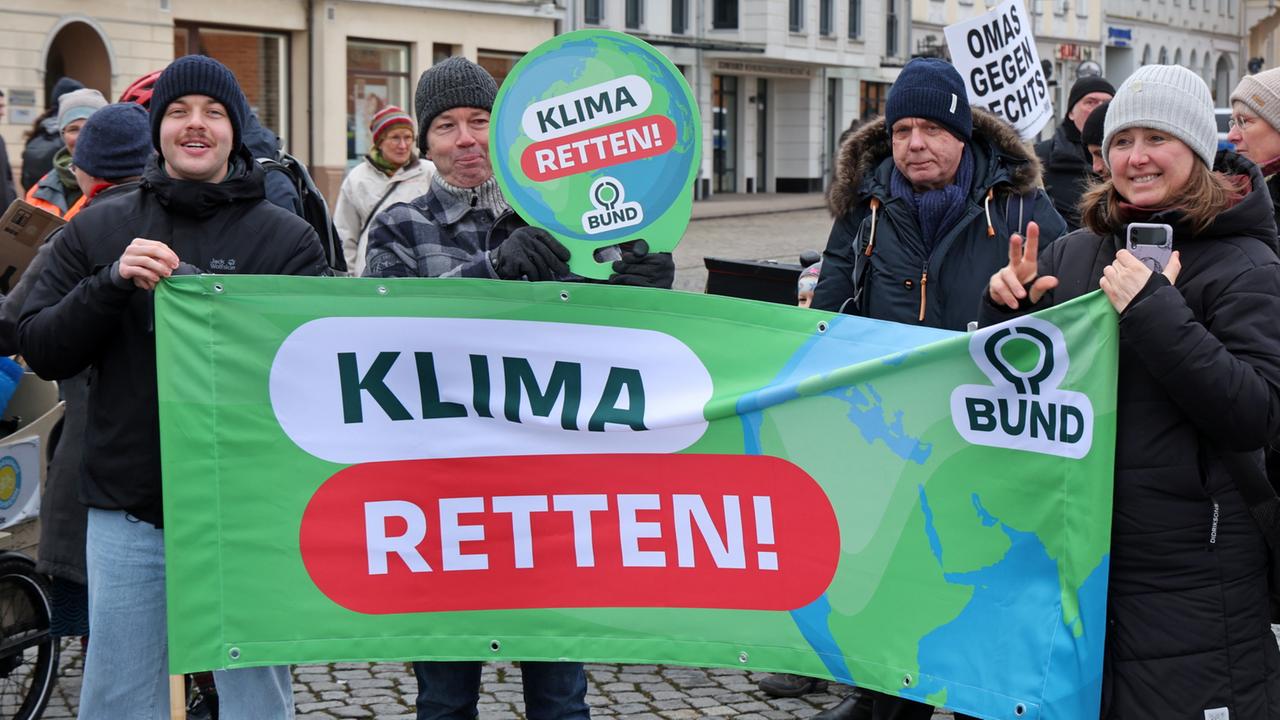
  • Ich habe das gepostet, weil in einem anderem Faden die Meinung kommentiert wurde, dass eine Mehrheit Klimaschutz nicht unterstützt. Im Licht dieser Untersuchungen ist das nicht wahr.

    Übrigens ist das gar nichts Neues, dass Menschen zu kollektiven Veränderungen bereit sind, die allen nützen, auch wenn diese Zeit, Geld, und Mühe kosten. Ein Beispiel aus der Geschichte: Im 19. Jahrhundert kam es in Europa etliche Male zu verheerenden Cholera-Pandemien, die wie z.B. in Hamburg 1892 zu Hunderten von Toten führten und das öffentliche Leben und wirtschaftliche Aktivitäten zum Erliegen brachten.

    1851 wurde erkannt, dass ein Bakterium der Auslöser war. Damit wurde auch klar, dass einerseits Impfungen helfen, andererseits aber vor allem bessere Trinkwasserhygiene und Abwasserentsorgung und -Reinigung. Bis dahin haben die Leute nämlich den Inhalt ihres Nachttopfs einfach aus dem Fenster auf die Strasse gekippt. (Prost!)

    Als Gegenargumente gegen diese Trinkwasserhygiene kann man alles anführen, was heute gegen die Maßnahmen zum Klimaschutz immer wieder gesagt wird: Es ist kostet Geld, es macht Umständen, man muss bequeme Gewohnheiten verändern, es erfordert insbesondere teure bauliche Maßnahmen, und es nützt dem Einzelnen erst mal nichts.

    Zum Glück für uns haben die Menschen sich damals kollektiv-intelligent verhalten und alle haben kollektiv dazu beigetragen, dass sich die Situation verbessert. Dies wurde auch durch Verordnungen und Sanktionen erreicht, aber vor allem durch Apelle an die Vernunft - natürlich besonders an die Vernunft derjenigen, die Entscheidungsmacht hatten.

    Genau so etwas brauchen wir heute auch.

    Und warum muss man überhaupt die Vorstellung, dass Menschen zu kollektivem vernünftigen Handeln, auch unter individuellen Opfern, nicht fähig sind, überhaupt richtig stellen? Im Grunde ist das Ideologie. In Wirklichkeit handeln Menschen ständig kollektiv. Wenn man mal das Verhalten bei einer Fußballweltmeisterschaft oder nach Katastrophen wie im Ahrtal betrachtet, haben Menschen sogar oft ein sehr großes Bedüfnis, sich kollektiv zu verhalten, und auch etwas positives beizutragen. Nicht nur appellieren ja gerade die rechten Ideologen und Nationalisten immer an Kollektive, auch die heutigen größeren Unternehmen oder Institutionen wie z.B. ein Krankenhaus sind hochgradig koordinierte und kollektive Organisation erfordernde Gebilde.


  • It works well for me.

    Actually, I am a long-term Debian user (for 15 years) and use it in parallel with Arch, since about ten years, and I had less trouble with Arch: When upgrading from Debian 10 to 12, GNOME broke for me so that I could not log in any more. I spent a day or so to search for the cause - it is related to the user configuration but I could not figure out what it was and I had to time-box the effort, and switched to StumpWM (a tiling window manager, which I had been using before). I had no such problem with Arch, and on top of that I could just install GNOME’s PaperWM extension just to give it a try.

    You could argue that my failure to upgrade was GNOME’s fault, not Debians, and in a way this is true. Especially, GNOME should not hide configuration in inscrutinable unreadable files, and of course it should parse for errors coming from backwards-compatible breaking changes.

    But the thing is, for software making many small changes is very often much easier than a few big changes. For example because it is far easier to narrow down the source of a problem. So, it is likely that GNOME on Arch had the same problem between minor upgrades, and fixed it without much fuss.

    But you also need to see that Arch is primarily a Desktop/end user system, while Debian is, for example, also a server system. Debian is designed for a far larger range of applications and purposes, and having many small breaking upgrades would likely not work well for these.


  • This would basically shory-circuit the EU’s open source strategy which is a cornerstone for efforts to reach some amount of digital sovereignty. It is especially incompatible with using Linux as a end-user or developer - taken at the letter, it would make Linux devices illegal because they are controlled by the user. It would also undermine security and confidentiality of any digital communication, and would have bad effects for digital economic communications in any business settings:

    • Giving more control and legal means to surveillance agencies is just the wrong move in a time where extreme right parties are rising and right-wing movements are increasingly controlling governments. Abuse of this surveillance tech is not any more a hypothetical possibility, we can observe it in the US in real-time.
    • controlling end-to-end encrypted messages is only possible if either the keys/certificates are not secret (which is possible with TLS), or the software on the end-users device is not controlled any more by the user (but perhaps by law enforcement, or companies). This overturns the basis of any FLOSS software system where trust is based on transparency and user control.
    • age verification will typically done by a form of attestation, a highly problematic concept. Again, this would require to run software on the users device which can’t be controlled by him or her, which is deceptively called “trusted computing”. (Technically, age verification could be done by other means, but this is not what these proposals aim for).
    • in the world of public-key cryptography, which is what TLS , business PKIs, GnuPG, and most other modern systems are based in, encryption and digital signatures are nothing but two sides of the same coin: Who breaks encryption keys necessarily also breaks signature keys. This means it is not possible any more to sign software such as the Linux kernel, or Email clients, or browser packages. Or even banking apps or bootloaders for smart phones. Which means to give control away to the entities, groups or induviduals controlling these keys.
    • Worse, it would also subvert the digital citizen IDs which are a key of the EUs digitalization strategy. The citizen ID is basically a digital signature. If the ID is really secure and can be used to digitally sign documents, any citizen can generate a strong random public key, sign it with his citizen id, and use it for encrypted communication, which can’t be broken. On the other hand, if it is not secure, it does not serve its purpose - what is the point if you can sign important stuff (like, say, applying for a passport, opening a bank account, or buying a house) if somebody else can break or subvert the signature?
    • Public key crypography is also used in organizations of EU member states. For example, the French military uses the matrix protocol and Elements client for secure communication. Should that be forbidden, too?
    • Ironically, this will make computing lot less safe, and also undermine trust in communication networks, because communication where we can’t be sure that the communicated symbols are genuine is for humans as worthless as the numbers on fake money. As a corollary, it is also bad for business: All business is based on some amount of trust. Would you do important business with somebody if the only communication channel you have available happens to be a messenger which is a compulsory liar?

    To sum up, apart from being destructive to civil rights, this would have massive negative consequences, because the goals are completely incompatible with other important goals.


  • I use it as the prefix key for my tiling window manager (stumpwm), and have mapped it to the “Super” X11 modifier for Emacs.

    (Also, I have mapped CapsLock to the Hyper modifier, which I mostly use for user-defined commands. Not as powerful as the original space cadet keyboard, but not bad!).

    BTW, one thing that is great about StumpWM is that you can define commands to script actions on GUI applications. For Example, if you are in a Firefox window, you can script Ctrl-t-B (or perhaps Hyper-B) to go to the adress bar, copy the URL, then call xsel to append the content of the buffer to a file which is called ~/bookmarks.txt, and finally open your preferred editor to add a comment.


  • For the moment, that would not be enforceable in respect to people with technical knowledge. Enforcing it would require authoritarian control and even China’s Great Firewall has way to circumvent it.

    On the other hand, this is already far more difficult than you might think. You could not install such an app from a server authenticated with TLS because the TLS keys might be subverted - the certification chain has national institutions as the top certificate authorities. You would also not be able to install such an app on an Android phone because Google has decided it needs developer attestation to install apps in a way accesible to end users. You can run Linux now but if all that is taken seriously, your options to run Linux might become limited. E.g. you already can’t run many banking apps on phones with user-controlled OS software. Railway apps like the German one already don’t work. In future, you might not even be able to use a municipial library’s or bookstore’s website this way.

    But more to the point, the real application case for this kind of civil rights is not some nerd kids which want to play DnD or minecraft on their own server or test their self-written IRC service. The real application case is what we see in the US, people being dragged out of their house and disappearing just because of their ancestry, how they look, being poor or the area they live in. They don’t have time to compile software or configure port-knocking protocols.

    Somebody has called these systems of “democratic” mass surveillance uncovered by Snowden “Turnkey Dictatorship” . I for sure wish they would have been wrong.


  • Why is this specifically relevant to Linux users?

    Well,

    • controlling end-to-end encrypted messages is only possible if either the keys/certificates are not secret (which is possible with TLS), or the software on the end-users device is not controlled any more by the user (but perhaps by law enforcement, or companies). This overturns the basis of any FLOSS software system where trust is based on transparency and user control.
    • age verification will typically done by a form of attestation, a highly problematic concept. Again, this would require to run software on the users device which can’t be controlled by him or her, which is deceptively called “trusted computing”. (Technically, age verification could be done by other means, but this is not what these proposals aim for).
    • in the world of public-key cryptography, which is what TLS , GnuPG, and most other modern systems are based in, encryption and digital signatures are nothing but two sides of the same coin: Who breaks encryption keys necessarily also breaks signature keys. This means it is not possible any more to sign software such as the Linux kernel, or Email clients, or browser packages. Or even banking apps or bootloaders for smart phones. Which means to give control away to the entities, groups or induviduals controlling these keys. Ironically, this will make computing lot less safe, and also undermine trust in communication networks, because communication where we can’t be sure that the communicated symbols are genuine is for humans as worthless as the numbers on fake money. (As a corollary, it is also bad for business: All business is based on some amount of trust. Would you do important business with somebody if the only communication channel you have happens to be a messanger which is a compulsory liar?)

    To sum up, this is a massive transfer of control.