Link shorteners and redirectors, especially new and lesser-known ones tend to get caught in the fray with things like Google Safe Browsing (which FF uses as well) and Smart Screen.
It’s because the original/shortened link gets reported and not the real/destination site. Then the domain (of the shortener/redirector) gets flagged, instead of the real site.
This happened to me at work this very week, with a redirector service that’s a part of our email security stack. FF and Chrome were both blocking links that were safe, because the redirector service itself was classified as sus.


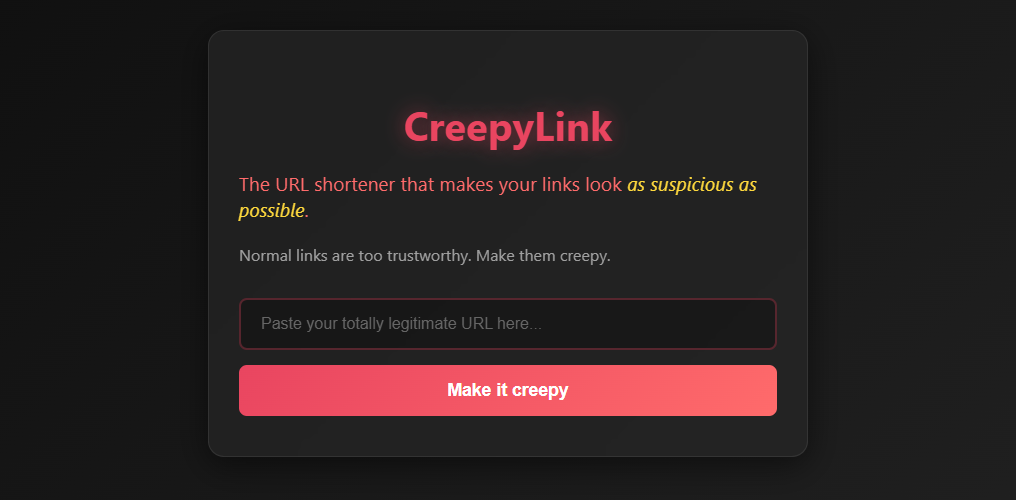
Looks like it got too creepy for its own good.
Link shorteners and redirectors, especially new and lesser-known ones tend to get caught in the fray with things like Google Safe Browsing (which FF uses as well) and Smart Screen.
It’s because the original/shortened link gets reported and not the real/destination site. Then the domain (of the shortener/redirector) gets flagged, instead of the real site.
This happened to me at work this very week, with a redirector service that’s a part of our email security stack. FF and Chrome were both blocking links that were safe, because the redirector service itself was classified as sus.
Firefox on Android doesn’t even have the “ignore” option :(
Pretty sure its under a more info dropdown