

[If you happen to be in Amsterdam on 9 October 2025, you may be interested in Bill Browder’s lecture: Being Russia’s Public Enemy]
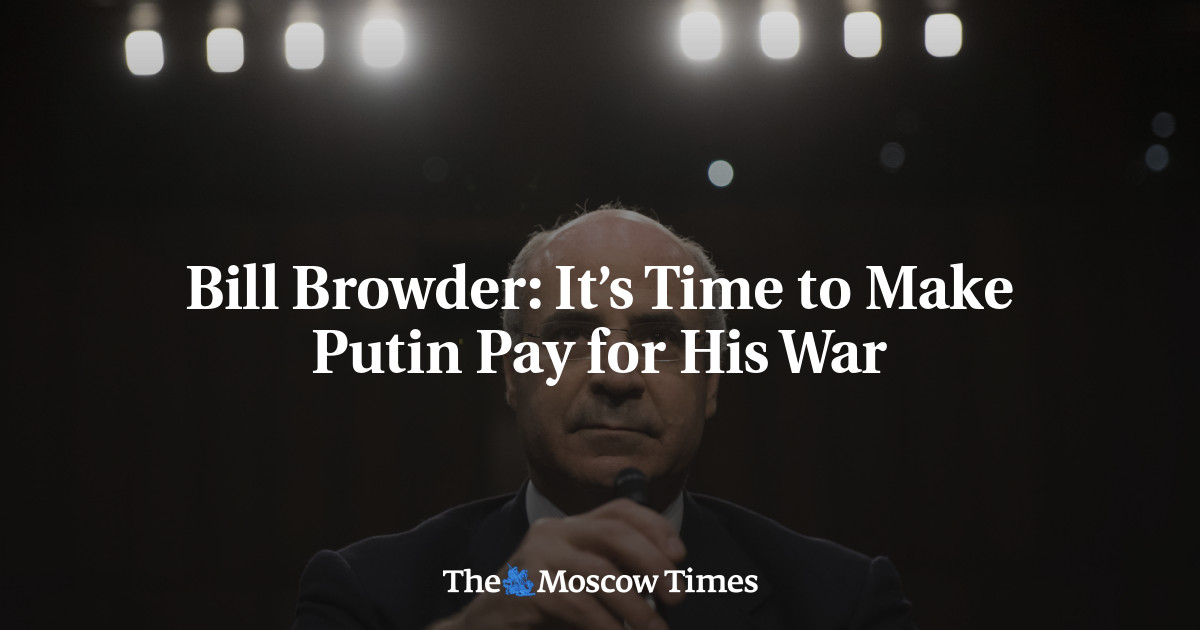
Once a leading investor in Russian markets, U.S.-born British financier Bill Browder has been an outspoken critic of the Kremlin since the death of his lawyer, Sergei Magnitsky, in a Russian prison in 2009.
Browder is best known for championing the Magnitsky Act, legislation enabling sanctions against Russian officials involved in corruption and human rights abuses.
[…]
Bill Browder: [Sanctions are] not doing the trick completely. In my opinion, the main bottleneck is oil. Oil is the main export commodity from Russia. Russia generates hundreds of billions of dollars a year from the sale of oil. And if that were to somehow be curtailed, then that would actually prevent Putin from having the resources in the future to continue his reign of terror on innocent people.
[…]
“The Magnitsky Act has been a very much greater success than I could have ever imagined when I started the campaign. I could have never imagined that 35 countries would have the Magnitsky Act and that it would create such troubles, not just for Russian human rights violators, but for human rights violators all over the world — China, Iran, Turkey.”
[…]
The fact that we’ve frozen $300 billion of Russian Central Bank reserves is a really helpful thing […] Russia has done $1 trillion of damage to Ukraine. So the [frozen] money should be confiscated and should be given to the Ukrainians for either their defense or, if the war were ever to end, for their reconstruction. Up until a few weeks ago, I was very frustrated with the position that many governments were taking, which is that somehow they believed that Russia was protected, or that money was protected by sovereign immunity, when at the same time Russia wasn’t respecting the sovereign borders of a neighboring state. […] But it seems now that there has been a new development, initiated by the German government, which would effectively come up with a solution which allows the money to be used for Ukraine. That’s really an important thing.
[…]
Since Trump has pulled out, [Europeans] are the main funders of Ukraine. Either the British, French, German taxpayers will pay or Putin will pay [by a preparation loan back by Russian frozen assets]. I think it’s a much easier pitch to the people of Germany, France and the U.K. for Putin to pay than to raise taxes.
[…]
[In case of Russia retaliates over the use of its frozen assets;] Let me put it this way: Anyone who continues to have assets in Russia deserves to have those assets taken away. So I’ve had no sympathy for those people when it comes to this situation and I can guarantee you that the numbers are nowhere near $300 billion.
[…]
I think that if there ever was a major ceasefire agreement [between Ukraine and Russia], the political prisoners [in Russia] should be part of that agreement. I think they’re an important part of the whole terror that Putin has inflicted. It’s not just against Ukraine — it’s against his own people.
[…]
If you haven’t read it, Bill’s book “Red Notice” is great read, I’d highly recommend it.